c. 1911 Leaders of Mexican Revolution After First Battle of Ciudad Juarez RPPC


When you click on links to various merchants on this site and make a purchase, this can result in this site earning a commission. Affiliate programs and affiliations include, but are not limited to, the eBay Partner Network.

c. 1911 Leaders of Mexican Revolution After First Battle of Ciudad Juarez RPPC:
$750.00
DATE: c. 1911PHOTOGRAPHER: Eugene Omar Goldbeck (see bio below)SUBJECT:Although Francisco Madero became the head of the Mexican Revolution, he was supported substantially by a group of men in the state of Chihuahua. Foremost among these was Pascual Orozco, who managed to recruit a sizeable group of men to fight under the banner of the Anti-Reelectionists. This photo taken in El Paso, Texas, shows the leaders of the revolution. They include José María Pino Suárez who became Vice-President under Madero, Venustiano Carranza who led the Constitutionalists to victory, Francisco “Pancho” Villa , Emilio Vázquez Gómez, whose brother had been promised the Vice Presidency, Francisco Madero, and, of course, Pascual Orozco.PROCESS: Gelatin SilverSIZE: 5.375" x 3.375"CONDITION: See photosSHIPPING: Shipping cost is non-negotiable, please consider it when offerding/buying.COMBINED SHIPPING: Yes, I do combine shipping. Additional shipping per item is 20% of the lower shipping cost [For example, if 2 items are purchased that have a $30 and $10 shipping cost each, the combined shipping cost becomes $32 for the 2 items]. If offerding/buying more than 1 item, please wait for an invoice with combined shipping before Omar Goldbeck (1892–1986) was an American commercial photographer best known for his panoramic group portraits and extensive documentation of military life. Born in San Antonio, Texas, to first-generation German American parents, he became interested in photography in 1901 after photographing President William McKinley during a parade. He soon began selling informal portraits of classmates and teachers and later worked as a freelance photographer for San Antonio newspapers. After graduating from Main Avenue High School in 1910, he traveled through the western United States, Alaska and South America, supporting himself by taking unsolicited photographs and offering prints to the subjects. During this period, he acquired a Cirkut camera and began specializing in panoramic photography.During World War I, Goldbeck served in the Photographic Division of the Aviation Section of the United States Army Signal Corps. He later taught at the Signal Corps School of Photography at Columbia University in New York City, where he met Marcella Fox. They married in 1919 and had five children. After briefly photographing returning servicemen and working for Fox Photo, Goldbeck returned to San Antonio and founded the National Photo Service in 1921. The company supplied news photographs and employed photographers who traveled throughout the country recording public events, organizations and large groups. In the 1930s, he expanded into newsreel photography and renamed the business the National Photo and News Service.Goldbeck became particularly celebrated for panoramic photographs of military units, conventions, schools and civic organizations. Often described as the unofficial photographer of the American military, he repeatedly toured military installations in the United States and abroad. His most ambitious group portrait arranged 21,765 servicemen into the form of an Air Force insignia and required detailed blueprints, more than six weeks of preparation and a specially constructed 200-foot tower. Goldbeck also patented improvements to the Cirkut camera that allowed it to operate effectively from elevated positions. Beyond commissioned group portraits, he photographed city skylines, landscapes, architecture, parades and everyday life during extensive travels around the world.Goldbeck’s photographs constitute an important visual record of twentieth-century Texas and American military culture. His images document San Antonio streets and architecture, military maneuvers and personnel, public celebrations, clubs, rodeos, commercial subjects and international travel. In 1967, after discovering that many early negatives had deteriorated in storage, he donated approximately 60,000 negatives, more than 10,000 vintage prints, business records and related photographic materials to the Harry Ransom Center at the University of Texas at Austin.Goldbeck continued traveling and making panoramic photographs into his eighties, including later work in color. Renewed scholarly interest led to exhibitions and books devoted to his career, including The Unpretentious Pose: The Work of E. O. Goldbeck, A People’s Photographer and The Panoramic Photography of Eugene O. Goldbeck. He died in San Antonio on October 27, 1986, and was buried at Mission Burial Park South.
c. 1911 Leaders of Mexican Revolution After First Battle of Ciudad Juarez RPPC:
$750.00
Related Items:
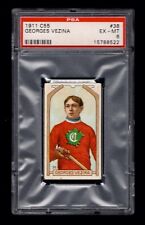
PSA 6 GEORGES VEZINA 1911 Imperial Tobacco C55 Hockey Card #38 ROOKIE, GRAIL
$49999.85
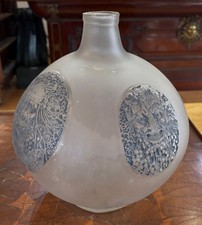
René Lalique Quatre Masques Vase No.878 Frosted Glass c1911 Signed R Lalique
$29954.40
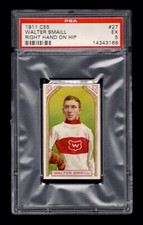
PSA 5 WALTER SMAILL 1911 C55 Hockey Card #27 CENTERED (With RIGHT HAND on HIP)
$11250.00