RARE Vintage Ralli quilt patchwork Quilt Majarashtra Kutch Embroidery Gujarat


When you click on links to various merchants on this site and make a purchase, this can result in this site earning a commission. Affiliate programs and affiliations include, but are not limited to, the eBay Partner Network.

RARE Vintage Ralli quilt patchwork Quilt Majarashtra Kutch Embroidery Gujarat:
$550.00
Rare impeccable condition hand-stitched patchwork siddhi quilt from the Meghwal tribe. It has been pieced together using scraps of sari and other fabrics around a central field of jacquard green satin.
There is an appliquéd border. The central field features patchwork designs~3 concentric diamonds, with a continued design to the border.
Running stitches quilt the green satin reverse.
The fabrics used are a mix of cotton and synthetic, the reverse has 2 shades of green, each of which are lively and gorgeous.
It is vintage, from the 1970s.
Although there is a remarkable resemblance to American patchwork and the theory that American missionaries in Pakistan in the 19th century taught these skills, the Meghwar tribes/Siddhis have been making their ralli (rilli) patchwork quilts for hundreds of years.
Size is nearly 8 feet by about 4 feet.
Perfect as a wall feature or a bed cover, on a couch and as a larger size bed runner.
Thank you for reading about this unique and beautiful quilt. Here is more information about these wonderful quilted textiles.
Ralli Quilts: Introduction
Ralli quilts are a visual feast of color, pattern and energy. Rallis are made extensively in Pakistan in Sindh, Baluchistan, southern Punjab and in the Indian states of Rajasthan and Gujarat bordering Sindh. The quilts are called "ralli" (or rilli, rilly, rallee or rehli) derived from the local word ralanna meaning to mix or connect. Rallis are made by women of rural villages, nomadic tribes and settled towns. These areas are filled with hundreds of different groups and castes differentiated by religion, mainly Muslim and Hindu, and occupation. The occupations include farmers, herders, various craftsmen, businessmen and landowners.
Rallis are made from scraps of cotton fabric hand dyed to the desired color. A typical ralli is about seven by four or five feet. Much of the fabric comes from old, worn shalwar kameez (traditional loose shirt and pant outfits). The most common colors in rallis are white, black, red, yellow, orange, green, dark blue and purple. However, there are some unique regional and tribal color palettes. For the bottoms of the rallis, the women often use old pieces of tie-dye, ajrak (red and blue block printed material) or other shawl fabric. An old head shawl will usually be large enough for the back of the quilt minus about six inches on top and side that need piecing. Ralli quilts have three to five layers of worn fabric or cotton fibers between the top and bottom layers. The filling is basted to the backing using long stitches that are later removed. Usually the piecing on the top is done by one woman. She calls on female family and friends to help with stitching the quilt together when she is ready. This is a time of talking, news sharing and singing for the women. To sew all three layers together, usually several women sit on opposite sides of the quilt placed on a reed mat on the ground. No quilting frame is used. The layers are sewed together by thick colored thread stitched in straight, parallel lines. Depending on the thickness of the quilt and the skill of the quilters, the stitches may be as close as 1/8 inch apart.
The three basic styles of rallis are: 1) patchwork made from pieces of cloth torn into squares and triangles and then stitched together, 2) appliqué made from intricate, cut out patterns in a variety of shapes and 3) embroidered quilts where the embroidery stitches form patterns on solid colored fabric. A distinguishing feature of ralli patterning in patchwork and appliqué quilts is the diagonal placement of similar blocks. Special rallis made for weddings or gifts often have a variety of embellishments including mirrors, tassels, shells and embroidery. There is much individual expression and spontaneity in color within the traditional patterns resulting in a seemingly endless variety in rallis.
Rallis are commonly used as a covering for wooden sleeping cots called charpoys, storage bags, or padding for workers or animals after the quilts are worn out. In the villages, ralli quilts are an important part of a girl's dowry. Special rallis are made for weddings or as gifts to holy men. There are legends, folk songs and sayings about rallis. Owning many ralli quilts is a measure of wealth in the rural areas. Yet the ralli is a humble craft, made of worn out clothing and other discarded fabric. It is not usually bought or sold but made by women for use in their family. Occasionally, women will make rallis for sale. After the terrible floods in Pakistan in August 2010, many women are making rallis in the refugee camps as a way to earn money to return to their villages.
Ralli: History of Ralli Patterns
The women carefully form patterns and symbols from cloth, some simple and some complex. The women making the quilts rely on their own memories and the memories of their mothers and older women to teach them the patterns. They do not use paper or any tools to make their patterns. There could be a great variety of patterns and styles of rallis even in a small village or community. The women have a large “mental portfolio” of quilt patterns they have made, known or have seen. They often describe them historically as “old patterns” or “new patterns.” The age of a ralli is hard to determine. With daily wear, a quilt could show signs of wear in just a few years. However, if the ralli was kept in the family stack for use by guests, it could last generations.
The variety of ralli patterns is intriguing. The motifs appear to have originated far back in the history of the Indus Region. The carvings of the desert tombs of Sindh and Baluchistan (covering about 400 years starting in the middle of the fifteenth century AD) have many similar motifs. The geometric designs in the blocks of carved stone are very similar to quilt blocks. Some of the lines in the stone look to some like lines of stitching. However, going back farther than this are clear similarities between ralli designs and ancient painted pottery of the region (most from about 2000-800 BC). The majority of the patterns are based on a geometric grid but there are also patterns based on circles, stars or flowers. Some of the designs that are shared by the rallis and pottery are simple including checkerboards, lines and triangles, yet others are complicated patterns using many shapes and design elements together.
One of the interesting aspects of the ancient pottery is that archaeologists think that the pots may have been painted by women as there are some small fingerprints still visible in the paint. Scholars report pottery with painted motifs seemed to have been replaced in the first millennium BC by plain, undecorated pottery yet the old designs continue in ralli and embroidery designs today. Even though ancient records are scarce, we know that quilting is an old tradition in the region. (Quilts are listed as an export item from western India to Europe on trade records from the early 1500s.) Could the women have passed on the traditional cultural designs from mother to daughter for many thousand years and at some point used them in quilts? There is a good example in the region where an ancient tradition survives today. In old graves from the time of painted pottery, women were buried wearing many white bangles. Women in the same rural areas today still wear multiple white bangles. Perhaps the ancient motifs have survived in their quilts as the tradition of bangle jewelry has survived on their arms.
RARE Vintage Ralli quilt patchwork Quilt Majarashtra Kutch Embroidery Gujarat:
$550.00
Related Items:
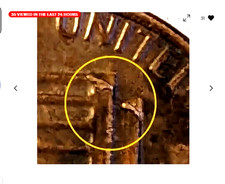
***NEW 1982 ERROR FOUND***1982 3.1G RARE Copper LINCOLN CENT ONE OF A KIND ERROR
$20000000.00
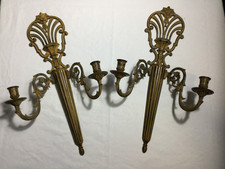
VINTAGE French Wall Candle Holder LARGE 23"x13"pair brass cast Rare Sconces
$1000000.00
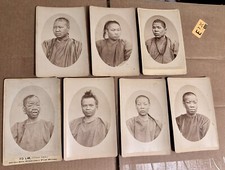
HISTORICALLY SIGNIFICANT CHINESE LEPERS SAN FRANCISCO RARE MEDICINE 19th Century
$1000000.00