The Festival of Kwanzaa
Kwanzaa is a 7 day festival celebrating the African American people, their culture and their history. It is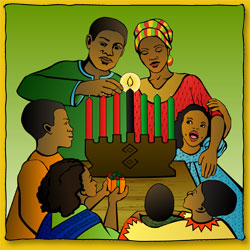 a time of celebration, community gathering, and reflection. A time of endings and beginnings. Kwanzaa begins on December 26th, the day after Christmas, and continues until New Years Day, January 1st.
Each evening a family member, usually the youngest child, lights candles in a special candleholder (kinara) and discusses one of the seven principles of Kwanzaa. On the sixth day, which falls on New Years Eve, family and friends get together to enjoy a large feast and to celebrate their history, culture, and the upcoming new year.
The holiday of Kwanzaa was created by Dr. Maulana Karenga in 1966, during the period of US history in which African Americans were involved in struggles for their civil rights. This was the period of Martin Luther King, the Civil Rights movement, and Black Power.
Dr. Karenga wanted to create a holiday that would bring African Americans together in celebration of their black culture. He was inspired by the “first fruit” or harvest festivals that were celebrated throughout Africa.
In fact the name he gave to the holiday, “Kwanzaa,” comes from the Kiswahili phrase for “first fruit” – matunda ya kwanza. (Kiswahili, or Swahili, is the largest spoken language on the African continent and thus the language of Kwanzaa). When Dr. Karenga chose the word “kwanza” for the name of his festival he added the extra “a” at the end to give the word greater significance.
Dr. Karenga used these first fruit festivals as his model for Kwanzaa because they shared characteristics which he felt were important. These characteristics were:
- The people gathered together to celebrate their crops and harvest
- The people would give thanks to their Creator for a good harvest and life.
- They would remember and celebrate their ancestors and the past.
- They allowed the people to recommit themselves to their community.
- They celebrated their history, culture, Creator, and the promise of the next year.
It was these characteristics that inspired Dr. Karenga when he developed the Nguzo Saba, or Seven Principles, of Kwanzaa. (Nguzo Saba is Kiswahili for “Seven Principles”) These principles are unity, self-determination, collective work and responsibility, cooperative economics, purpose, creativity, and faith. These are the foundation of Kwanzaa.
The dates of the celebration, December 26 – January 1, were chosen to correspond to the end of the year celebrations in America. Kwanzaa begins the day after Christmas. This to bypass the commercial buying period but to take advantage of the seasonal holiday spirit.
 EPN
EPN
The First Fruits Festival of Kwanzaa: A Zulu Celebration
$24.48

Disney TIME TO CELEBRATE FESTIVAL OF HOLIDAYS PIN 2022 DCA Kwanzaa LR
$13.99
title: kwanzaa